 Varun Sharma
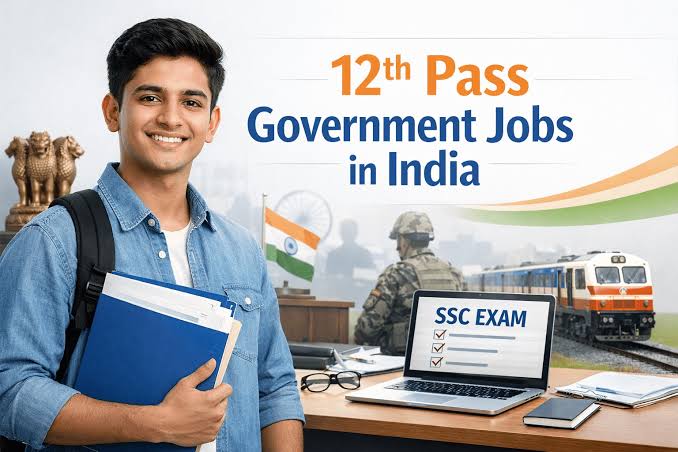
Completing Class 12 opens the door to a wider range of job opportunities than Class 10 alone. Government departments, public organizations, banks, railways, defence services and private employers regularly advertise positions for candidates with higher-secondary qualifications.
Among competitive government opportunities, SSC CHSL is a familiar example for 12th-pass candidates. Current 2026 recruitment listings show SSC CHSL vacancies with 2,536 posts and a stated application deadline of October 7, 2026. Candidates should verify dates and eligibility directly from the official recruitment notification before submitting an application. citeturn0search10
Different jobs have different requirements. Some positions accept candidates from any stream, while others may require particular subjects, typing skills, computer knowledge or physical standards. Age limits and reservation rules can also differ.
For private-sector jobs, Class 12 candidates can explore customer support, sales, data-entry-related roles, retail, office assistance, delivery operations and entry-level digital jobs. Skills such as basic computer knowledge, communication, Excel and typing can improve employability.
Government exam preparation generally requires a structured routine. Candidates can begin by studying the syllabus, understanding the exam pattern and solving previous papers. Regular practice in reasoning, mathematics, English or Hindi and general awareness can help build familiarity with competitive questions.
Applicants should maintain a document folder containing educational certificates, identity documents, photographs and other required certificates. Before submitting a form, they should check spelling, date of birth, category and other personal details carefully.
A 12th-pass qualification is not the end of education or career development. Candidates can work while continuing graduation, professional courses or skill training where possible. Combining a job search with skill development can create more long-term options.
Anime: Why Japanese Animation Has Become a Global Entertainment Phenomenon
Anime refers broadly to animated productions associated with Japan and has developed a large international audience. What makes anime distinctive is not one single style but the wide range of stories, visual approaches and genres available to viewers.
Anime includes action, comedy, romance, fantasy, science fiction, sports, mystery, historical stories and everyday-life dramas. This variety means that anime is not limited to children’s entertainment. Many series are written for teenagers or adults and explore complex relationships, ambition, friendship and social themes.
One reason anime connects with global audiences is its strong focus on characters. Long-running series can give characters time to develop, make mistakes and change. Viewers may follow a character from an ordinary beginning through major challenges and achievements.
Streaming platforms have also made anime easier to discover outside Japan. Subtitles and dubbing allow international viewers to watch series in their preferred language. Social media and fan communities further expand interest through discussions, edits, artwork and recommendations.
Anime has influenced fashion, gaming, music and online culture. Popular characters and scenes are frequently referenced in memes and short videos. Anime-inspired designs also appear in merchandise, events and collaborations with other entertainment brands.
New viewers can find the huge number of available titles confusing. A simple approach is to begin with a genre they already enjoy. Someone who likes sports may start with a sports anime, while a mystery fan can choose a suspense-focused series.
The global growth of anime shows how animation can cross language and cultural boundaries. Strong storytelling, memorable characters and creative worlds continue to attract viewers who are discovering Japanese animation for the first time.