
 Varun Sharma
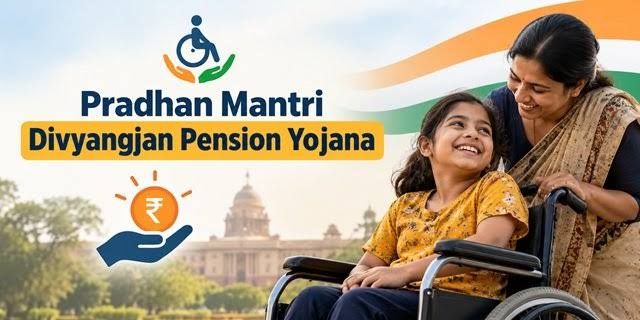
The government has taken an important step towards strengthening social security for economically weaker families through changes in its social assistance programme. The National Social Assistance Programme (NSAP) has been renamed the Pradhan Mantri Samajik Sahayata Yojana, with its continuation approved for five years, from 2026-27 to 2030-31.
The decision was approved by the Union Cabinet on October 14, 2026, with a total financial allocation of ₹53,428 crore. The initiative aims to provide financial support to vulnerable sections of society, including elderly people, widows and persons with disabilities.
What Has Changed Under the Scheme?
One of the most important changes concerns the disability pension programme. Earlier, beneficiaries needed to have at least 80% disability and be 18 years or older to qualify under the central assistance criteria. The revised rules have reduced the disability benchmark to 40% and removed the minimum age requirement.
This means eligible children with benchmark disabilities can also receive assistance, subject to the applicable household eligibility conditions.
Increased Financial Assistance
The revised disability pension provisions offer central assistance of ₹375 per month to beneficiaries aged 0 to 79 years and ₹625 per month to those aged 80 years and above. The number of potential beneficiaries under this category is expected to increase from 8.33 lakh to 27.48 lakh.
The programme also continues its existing support for old-age pension, widow pension and family benefit schemes.
Why Is This Initiative Important?
Financial assistance can make a meaningful difference for families facing economic difficulties. By expanding disability eligibility and including children, the government aims to make social protection more accessible to deserving households.
Conclusion
The Pradhan Mantri Samajik Sahayata Yojana represents an important step towards inclusive social welfare. Its revised disability pension rules could help more vulnerable families access financial support and improve their everyday living conditions.


 adminbackup